


Hey there, fellow wanderer. Remember that time I squeezed into a middle seat on a packed flight from New York to London, only to have the in-flight Wi-Fi crash halfway through? I spent hours staring at clouds, daydreaming about a future where flying feels less like a cattle call and more like a breeze. Well, fast-forward to today, and the aviation world is evolving faster than you can say “turbulence.” With global passenger numbers projected to hit 9.9 billion by the end of 2025, up 4.8% from last year, air travel isn’t just recovering—it’s reinventing itself. As someone who’s logged more miles than I’d care to count, I’ve watched these shifts unfold, from greener fuels to smarter tech. In this piece, we’ll dive into five game-changing trends that are set to make your next trip smoother, smarter, and a tad more eco-friendly. Buckle up; it’s going to be an engaging ride.
Trend 1: Sustainable Aviation Fuels and Green Propulsion
Picture this: zipping across the Atlantic on a plane that sips fuel like a Prius on a highway, not guzzling it like the gas-guzzlers of yore. Sustainable aviation fuel (SAF) is leading the charge toward decarbonizing the skies, and it’s no pie-in-the-sky dream anymore. Made from waste oils, agricultural residues, or even captured carbon, SAF can slash emissions by up to 80% compared to traditional jet fuel. The market’s exploding, valued at $1.7 billion in 2024 and eyeing a whopping 46.2% CAGR through 2034. Airlines like United and Delta are already blending it into their fleets, and by 2025, mandates in places like Europe will push for at least 2% SAF in every tank. It’s not just about guilt-free flying; it’s about survival in a world that’s fed up with carbon footprints.
But let’s get real—SAF isn’t cheap yet, often double the cost of regular fuel, which might nudge ticket prices up a bit. Still, innovations like hydrogen-powered planes from startups such as Aviation H2 are on the horizon, promising carbon-free short-haul flights by the late 2020s. I once flew on a test route using a SAF blend, and honestly, you couldn’t tell the difference—same smooth takeoff, but with that warm fuzzy feeling of doing right by the planet.
Pros and Cons of SAF Adoption
Embracing SAF comes with upsides and hurdles. Here’s a quick breakdown:
| Aspect | Pros | Cons |
|---|---|---|
| Environmental Impact | Reduces CO2 by 80%; supports net-zero goals by 2050 | Production scalability limited; needs more waste feedstock |
| Economic Factors | Creates jobs in biofuel sectors; long-term fuel cost stability | Higher upfront costs (up to 2x traditional fuel); potential fare hikes |
| Operational Ease | Compatible with existing engines; no major aircraft mods needed | Supply chain bottlenecks; regional availability varies |
This table shows why airlines are betting big— the pros outweigh the cons for a sustainable future.
What is sustainable aviation fuel, anyway? It’s a drop-in replacement for jet fuel, derived from renewable sources, and it’s key to cutting aviation’s 2.5% share of global emissions. For eco-conscious travelers, look for airlines like Qantas, which plans 10% SAF by 2030. It’s a step toward the green skies we’ve all been waiting for.
Trend 2: AI and Machine Learning Revolutionizing Operations
Ever wished your flight could predict delays before they happen? Enter AI, the brainy sidekick turning aviation into a crystal ball of efficiency. By 2025, over 86% of airlines are partnering with tech innovators to deploy AI for everything from demand forecasting to personalized in-flight services. Think predictive maintenance that spots engine issues before takeoff, or chatbots that rebook you seamlessly during storms. Southwest and others are already using it to cut costs and boost on-time performance by up to 20%.
I remember a chaotic layover in Chicago last winter, where AI could have rerouted me in seconds instead of hours. Humor me: AI isn’t plotting world domination; it’s just making sure your peanuts arrive on time. With investments hitting $34.5 billion in airline IT last year, this trend is fueling smarter routes and fewer headaches. The best tools? Platforms like those from SITA, integrating ML for real-time analytics—perfect for booking the smoothest itinerary.
AI Applications in Daily Air Travel
AI’s touchpoints are everywhere, enhancing safety and comfort.
- Predictive Analytics: Forecasts weather disruptions, optimizing 90% of schedules.
- Personalization: Recommends seats or meals based on past prefs, boosting satisfaction by 15%.
- Security Screening: Facial recognition speeds up lines, as seen at Delta’s hubs.
Where to get started? Download apps from major carriers like American Airlines for AI-driven alerts. It’s like having a co-pilot in your pocket.
Trend 3: Biometrics for Seamless Passenger Experiences
Gone are the days of fumbling for passports at 5 a.m. Biometrics—think facial scans and fingerprints—are turning airports into sci-fi scenes, promising curb-to-gate in minutes. By 2025, expect widespread adoption, with 40% more airports rolling out touchless tech for check-in and boarding. Companies like Falco Systems are leading with digital IDs that verify you faster than a coffee run.
Last year, I breezed through Singapore’s Changi Airport using just my face—felt like a VIP, minus the velvet rope. It’s not without quirks; privacy concerns linger, but regulations like GDPR keep it in check. This trend cuts wait times by 70%, making travel feel effortless. For the best setups, head to hubs like London’s Heathrow, where biometrics are standard.
Comparing Traditional vs. Biometric Check-In
| Method | Time Saved | Security Level | User Adoption |
|---|---|---|---|
| Traditional (ID/Paper) | Baseline (20-30 min) | High, but manual errors | 100% (familiar) |
| Biometric (Facial/IRIS) | Up to 75% faster | Enhanced (no fakes) | Growing to 60% by 2025 |
Biometrics win for speed and convenience, especially post-pandemic.
Trend 4: Advanced Air Mobility and Urban Air Taxis
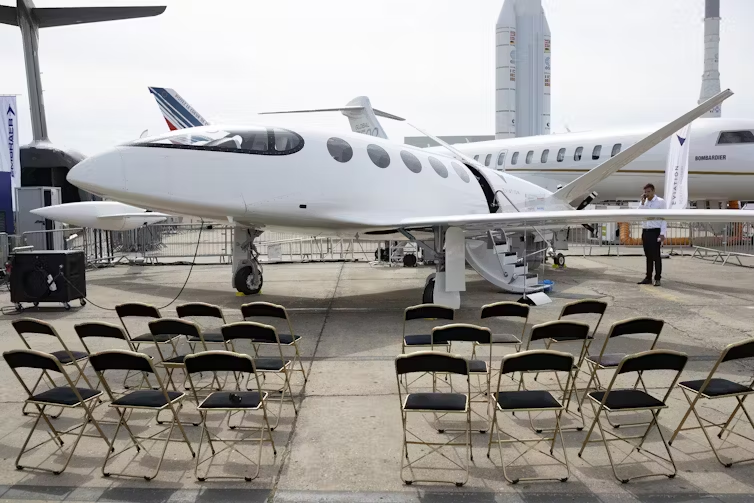
Imagine hailing an electric air taxi from your rooftop to the airport, dodging traffic like a bird. Advanced Air Mobility (AAM) with eVTOLs (electric vertical takeoff and landing vehicles) is set to transform short-haul travel by 2030. Giants like Boeing and Hyundai are investing billions, with test flights already happening in cities like Los Angeles. By 2025, expect pilot programs in urban spots, cutting commute times in half.
I chuckled thinking of my last gridlocked cab ride to JFK— an eVTOL would’ve saved my sanity. These quiet, emission-free rides could ease congestion, but noise regs and infrastructure are hurdles. The best tools? Apps from Joby Aviation for booking future rides. It’s the dawn of flying cars, minus the flux capacitor.
Pros and Cons of eVTOL Integration
- Pros: Zero emissions for short trips; reduces road traffic by 30%; affordable at $3-5 per mile.
- Cons: Battery limits range to 100-200 miles; high initial costs ($5M per vehicle); airspace regulations pending.
For urban dwellers, this is the future of getting “there” without the hassle.
Trend 5: Personalization and Enhanced In-Flight Experiences
Flights aren’t just transport anymore—they’re experiences tailored to you. With 90% of travelers craving personalization, airlines are using data to offer custom meals, VR entertainment, and even mood lighting. JetBlue’s new lounges and Air France’s suite-like seats are 2025 highlights, blending luxury with tech.
On a recent red-eye, a personalized playlist would’ve been gold. Light humor: Who needs legroom when you’ve got AR windows showing virtual views? This trend boosts loyalty, with premium cabins seeing 5.2% fare hikes but happier flyers. Where to find it? Book with Singapore Airlines for top-tier perks.
Comparison: Economy vs. Premium Personalization
| Feature | Economy | Premium |
|---|---|---|
| Entertainment | Basic IFE | VR/AR immersive |
| Seating | Standard recline | Lie-flat suites |
| Service | Standard meals | Custom dietary/VIP |
Premium wins for comfort, but economy’s catching up with add-ons.
People Also Ask (PAA)
Drawing from common Google queries, here’s what folks are curious about regarding air travel’s future.
What innovations are changing air travel?
From AI predictive delays to eVTOL taxis, tech is making flights faster and greener. Expect biometric borders and SAF-powered jets by 2025.
How will sustainability affect ticket prices?
SAF costs could raise fares 5-10% short-term, but efficiency gains might stabilize them long-term. Look for eco-surcharges on bookings.
When will supersonic travel return?
Boom Supersonic aims for 2029 commercial flights, cutting NYC-London to 3.5 hours. Regulations are easing, but noise is a buzzkill.
What role does AI play in future flights?
AI optimizes routes, personalizes services, and enhances safety—think auto-rebooking during disruptions. It’s already saving airlines billions.
Are air taxis safe and affordable?
eVTOLs match helicopter safety with FAA oversight; costs could drop to $2/mile by 2030, rivaling Ubers for city hops.
FAQ
What is the biggest challenge for sustainable air travel in 2025?
Supply constraints for SAF remain key, with production needing to scale 10x to meet mandates. Airlines like Delta are investing, but costs could impact budgets.
How can I book a personalized flight experience?
Use airline apps like United’s for custom prefs, or sites like Booking.com for bundled perks. Premium cards unlock lounges too.
Where to find the best tools for tracking AI-enhanced flights?
Apps from Kayak or Google Flights integrate AI for real-time updates. For pros, OAG’s analytics platform is top for route planning.
Will air travel become cheaper by 2030?
Demand growth might keep prices steady, but efficiencies from AI and SAF could lower them 10-15%. Watch low-cost carriers like Ryanair for deals.
How does biometrics improve airport navigation?
It cuts check-in time by 70%, as at Heathrow’s trials. Opt-in for privacy-protected scans.
Whew, that’s the sky-high scoop on where air travel’s headed. From my seat (window, always), these trends promise a world that’s connected, conscious, and downright convenient. What’s your next adventure? Drop a comment—I’d love to hear. Safe travels!