


Imagine squeezing into a cramped economy seat, staring at the back of someone’s head for hours while the plane guzzles fuel like it’s going out of style. That’s the air travel many of us know today—efficient enough to get us across the globe, but hardly a dream ride. But what if the future flips that script? Picture zipping through the skies in a quiet electric plane, or even a supersonic jet that halves your flight time, all while sipping a personalized drink recommended by an AI that knows your tastes better than your barista. As someone who’s chased sunsets from New York to Tokyo more times than I can count, I’ve seen the industry’s growing pains firsthand. Back in 2019, I barely made a connection in Dubai after a sandstorm grounded half the flights—delays that felt endless. Fast forward to today, and tech is starting to smooth those edges. The future of air travel isn’t just about faster wings; it’s about smarter, greener, and more human journeys. Let’s dive in and explore what’s on the horizon.
Sustainable Aviation: Greening the Skies
Sustainability isn’t a buzzword anymore—it’s the lifeline for aviation’s survival. With the industry aiming for net-zero emissions by 2050, airlines are racing to cut their carbon footprint, which currently accounts for about 2-3% of global CO2. This shift promises cleaner flights without sacrificing the joy of wanderlust.
Take United Airlines, for instance—they’ve poured billions into sustainable aviation fuel (SAF), becoming the first major carrier to commit to net-zero without offsets. I remember reading about their “Flight for the Planet” back in 2019; it was a biofuel-powered test that felt like a hopeful spark. Now, in 2025, SAF production is ramping up, though challenges like high costs and limited supply linger. Still, it’s exciting to think of fueling up with waste-derived jet juice instead of fossil fuels.
Electric and Hybrid Aircraft: The Power Shift
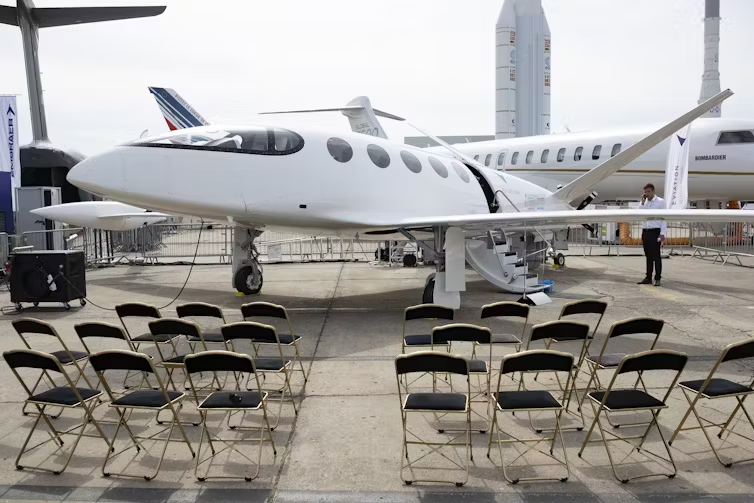
Electric planes are no longer sci-fi—they’re taxiing toward reality. By 2025, developments like Heart Aerospace’s ES-30 hybrid-electric regional jet are set for test flights, promising short-haul routes with zero-emission electric modes up to 200 km. These birds use high-torque motors for short runways, making them perfect for underserved spots.
Heart’s X1 demonstrator, the largest all-electric aircraft yet, is slated for its maiden flight early this year from Plattsburgh, New York. As a pilot buddy once joked over coffee, “If batteries can power my phone all day, why not a plane?” The tech is advancing, but scaling for longer flights remains the big hurdle.
Pros and Cons of Electric Aviation
- Pros:
- Lower operating costs: Electricity is cheaper than jet fuel, potentially slashing expenses by 30-50%.
- Reduced noise: Quieter takeoffs mean happier communities near airports.
- Environmental wins: Zero tailpipe emissions for pure electrics, aligning with global green goals.
- Cons:
- Battery weight: Current tech limits range to under 300 miles, fine for regionals but not transatlantic hops.
- Infrastructure needs: Airports must build charging stations, a multi-billion-dollar upgrade.
- Upfront costs: Hybrids like the ES-30 could cost 20% more initially than traditional jets.
Supersonic Travel: Breaking the Sound Barrier Again
Remember Concorde’s glamorous days? Supersonic flight is roaring back, with Boom Supersonic’s XB-1 breaking Mach 1 in January 2025 over Mojave. Their Overture jet aims for passenger service by 2029, cutting New York to London to under four hours.
NASA’s X-59, testing in 2025, tackles the sonic boom issue with a design that turns it into a soft “thump,” potentially lifting the U.S. ban on overland supersonic flights. It’s thrilling—I’ve daydreamed about sipping champagne at 1,500 mph—but fuel efficiency is key to making it viable.
Comparison: Supersonic vs. Traditional Jets
| Aspect | Supersonic (e.g., Overture) | Traditional Subsonic (e.g., Boeing 787) |
|---|---|---|
| Speed | Mach 1.7 (1,300 mph) | Mach 0.85 (650 mph) |
| Flight Time (NYC-London) | ~3.5 hours | ~7 hours |
| Fuel Efficiency | 2x less efficient, but SAF-compatible | High, with 20% better than older models |
| Ticket Price (Est.) | $5,000+ premium | $500-2,000 economy |
| Noise Impact | Quiet boom tech | Minimal sonic issues |
This table highlights why supersonic could revolutionize business travel, though it’s pricier for now.
AI and Automation: Smarter Skies Ahead
AI is the invisible co-pilot transforming air travel. From predicting delays to personalizing your in-flight movie, it’s making flights smoother. In 2025, tools like Delta’s AI concierge are rolling out, suggesting upgrades based on your habits.
American Airlines uses AI to forecast missed connections, even holding planes if it makes sense—saving passengers from overnight layovers. During a stormy trip to Chicago last year, an AI alert rerouted me seamlessly; it felt like having a travel genie.
How AI Enhances Passenger Experience
- Predictive Booking: Algorithms scan your data for the cheapest dates, like Google’s AI flight search spotting deals under $300 from Berlin.
- Real-Time Updates: Apps now translate announcements via AI, as Wingie does for multilingual travelers.
- Personalization: In-flight meals tailored to diets, reducing waste by 15%.
Urban Air Mobility: Flying Taxis Take Off
eVTOLs—electric vertical takeoff and landing vehicles—are set to ease city congestion. By 2025, Joby Aviation and Archer are eyeing certifications for air taxi services in places like Los Angeles. Imagine hopping from Manhattan to JFK in 10 minutes, no traffic jams.
Singapore’s Changi Airport is testing UAM integrations, blending drones with traditional flights. It’s futuristic, but my inner kid gets excited thinking of vertical shortcuts—though regulations will slow the rollout.
Biometrics and Seamless Travel: Goodbye, Lines
Facial recognition and biometrics are turning airports into breeze-through zones. In 2025, Schiphol and Berlin Brandenburg are expanding “smart” systems for check-in to baggage claim. No more fumbling for IDs; a quick scan does it all.
Apple’s Wallet integration with digital IDs is making borders paperless. Last time I flew through Heathrow, the biometric gate saved me 20 minutes—pure bliss amid the chaos.
Pros and Cons of Biometric Travel
- Pros:
- Speed: Cuts wait times by 50%, per SITA reports.
- Security: Harder to fake than passports.
- Contactless: Ideal post-pandemic.
- Cons:
- Privacy worries: Data breaches could expose travelers.
- Equity issues: Not everyone has compatible tech.
- Global inconsistencies: Varies by country.
Challenges on the Horizon: Navigating Turbulence
Despite the innovations, 2025 brings hurdles. Supply chain snarls from engine shortages are capping growth at 3-4%, per OAG forecasts. Fuel volatility, with prices swinging wildly, eats into profits—up to 40% of costs.
Cybersecurity threats loom large; a single hack could ground fleets. And workforce shortages? Boeing predicts needing 674,000 new pilots by 2042. I’ve chatted with overworked ground crew; burnout is real.
Geopolitics adds fuel to the fire—conflicts reroute flights, hiking costs. Yet, these challenges spur innovation, like AI for resilient ops.
Economic Outlook: Profits and Passenger Boom
Air travel demand is surging, with 5.2 billion passengers expected in 2025—a 4.4% revenue jump to over $1 trillion. Low-cost carriers are thriving on budget fares, but premiums like supersonic will cater to high-enders.
McKinsey notes profitability nearing pre-pandemic levels, though labor and fuel squeeze margins. For travelers, it’s a win: more routes, better value. Where to book? Sites like Google Flights use AI for deals; for premiums, check Boom Supersonic.
Best Tools for Future-Proof Travel Planning
To navigate this evolving world, arm yourself with top tools. For informational searches like “what is sustainable aviation,” try IATA’s resources. Navigational? Head to airline apps for real-time tracking.
Transactional picks:
- Kayak’s Ask Kayak: AI chats for custom itineraries, spotting nonstops under €300.
- Expedia’s Flight Deals Feed: Personalized from your home airport.
- Delta’s App: AI rebooking during disruptions—best for U.S. hubs.
These make booking transactional bliss, saving time and cash.
People Also Ask
Based on common Google queries, here’s what folks are curious about the future of air travel:
- What is the future of commercial aviation? It’s leaning toward hybrid-electric regionals and SAF-powered long-hauls, with eVTOLs for cities. Expect 6.5% growth in 2025, per BCG, but sustainability drives it all.
- How will air travel change in the next 10 years? Biometrics for seamless security, AI for predictive delays, and supersonic options for elites. Electric short-flights could cut emissions by 20%, though infrastructure lags.
- What innovations are coming to air travel? Boom’s Overture for speed, Heart’s ES-30 for green hops, and AI like Airbus Skywise for efficiency. Urban air mobility might add flying taxis by 2030.
- Will air travel become more expensive? Fares may rise 5-10% due to SAF mandates and eco-taxes (e.g., Denmark’s new $4-42 levy), but competition keeps economy steady.
- Is aviation getting greener? Yes, with SAF investments from airlines like Delta’s Sustainable Skies Lab. But full net-zero by 2050 needs policy pushes, like EU blending mandates.
FAQ
What is sustainable aviation fuel, and where can I learn more?
SAF is a drop-in alternative to jet fuel, made from waste like cooking oil, cutting emissions by up to 80%. Airlines like United are leading; check IATA’s SAF page for details. It’s pricier now, but production is scaling.
How soon will electric planes be common?
Short-haul electrics like Heart’s ES-30 could enter service by 2028 for 200-km routes. For longer? Hybrids by 2030. Battery tech is the bottleneck—MIT’s new sodium-air cells might triple energy density.
Will supersonic flights be affordable for average travelers?
Not yet—Boom’s Overture tickets could start at $5,000 round-trip. But as fleets grow, prices may drop like early jets did. Focus on business routes first.
What role does AI play in reducing flight delays?
AI predicts disruptions 90% accurately, optimizing routes and crew. Tools like easyJet’s forecast maintenance, cutting tech delays by 20%. It’s a game-changer for on-time arrivals.
How can I choose eco-friendly airlines for my trips?
Look for carriers investing in SAF, like Alaska or KLM. Use ClimateSort to compare emissions. Offset via apps, but prioritize green fleets for real impact.
As we wrap up, the future of air travel feels electric—literally. From my delayed Dubai layover to envisioning a supersonic hop, the industry’s evolution excites me. It’s not perfect; challenges like costs and climate loom. But with innovation at the helm, we’ll soar greener and faster. Buckle up—your next adventure might just redefine flying.