



Hey there, fellow wanderer. Picture this: You’re staring out the window of a plane at 30,000 feet, the world below a patchwork of greens and blues that makes your heart swell. But then that nagging thought creeps in—what’s my trip costing the planet? I’ve been there more times than I can count. Last summer, I flew from Seattle to New York for a family reunion, and the guilt hit hard. That one round-trip? It spewed out about 1.5 tons of CO2, roughly what an average person in a developing country emits in a whole year. Ouch. But here’s the thing: We don’t have to ground ourselves forever. Climate-conscious air travel is about smarter choices, pushing for change, and flying with purpose. It’s not perfect, but it’s possible, and it’s worth fighting for.
As someone who’s ditched a few unnecessary trips—like that spontaneous weekend getaway that sounded fun but wasn’t essential—I’ve learned that advocating means starting small. It’s sharing stories, supporting innovations, and holding airlines accountable. In this piece, we’ll dive into why air travel matters for the climate, what you can do right now, and how the industry is evolving. Let’s make those wings work for the earth, not against it.
The Environmental Impact of Air Travel
Air travel connects us like nothing else, but it’s a heavyweight in the climate fight. Right now, aviation accounts for about 2.5% of global CO2 emissions, and that’s just the tip. When you factor in contrails—those white streaks planes leave behind—and other high-altitude effects, it’s closer to 5% of human-caused warming. By 2050, without big changes, that could jump to a quarter of our remaining carbon budget if we want to cap warming at 1.5°C.
Think about it: A single long-haul flight can match the annual emissions of someone driving a gas car for a year. I’ve felt that sting personally. On my last cross-country hop, I calculated it using a tool from the International Civil Aviation Organization (ICAO)—it was eye-opening. The good news? Awareness is growing, and so are solutions. We’re not doomed to choose between adventure and the planet; we can advocate for a middle path.
What Is Climate-Conscious Air Travel?
Climate-conscious air travel boils down to making choices that minimize harm while maximizing joy. It’s opting for direct flights over connections, packing light to save fuel, or even skipping that third vacation if it’s not vital. At its core, it’s about intentionality—flying less but better, and pushing airlines to do the same.
I remember a trip to Europe where I chose a train from Paris to Amsterdam instead of a short flight. It took longer, sure, but the scenery was stunning, and my emissions dropped by 90%. No jet lag, either—just pure, grounded delight. This mindset isn’t sacrifice; it’s smarter living. It’s also a call to action: Support policies for sustainable fuels and efficient planes. By advocating, we turn guilt into momentum.
Sustainable Aviation Fuel: A Game-Changer
Sustainable aviation fuel, or SAF, is like jet fuel’s eco-friendly cousin—made from waste oils, agricultural leftovers, or even captured CO2, it slashes emissions by up to 80% over its lifecycle. Unlike traditional kerosene, SAF doesn’t compete with food crops or wreck forests when sourced right.
Major airlines like United and Delta are already blending it into flights, with commitments to hit 10% SAF by 2030. It’s drop-in ready, meaning no plane tweaks needed. Imagine fueling up with recycled cooking oil—sounds wild, but it’s happening. The catch? Production needs to scale massively, from today’s tiny fraction to billions of gallons. As consumers, we advocate by choosing airlines investing in SAF and urging governments for incentives.
Carbon Offsetting: Does It Really Work?
Carbon offsetting lets you “pay” for your flight’s emissions by funding projects like tree planting or renewable energy elsewhere. It’s not a magic eraser—your plane still burns fuel—but done right, it neutralizes the impact. Programs verified by standards like Gold Standard or Verified Carbon Standard ensure real, additional reductions.
I’ve offset a few flights through reputable outfits, and it eases the mind without greenwashing. For instance, after a Hawaii trip, I supported a reforestation project in Indonesia that protects peatlands. But offsets are a bridge, not the destination. Pair them with fewer flights for true impact. Skeptical? Fair—some schemes flop, but vetted ones deliver. Advocate by demanding transparency from airlines.
Choosing Low-Emission Airlines and Flights
Not all flights are created equal. Some airlines pack more passengers per plane or use fuel-sipping models like the Boeing 787, cutting emissions per seat by 20%. Tools like Google Flights now show CO2 estimates, labeling options as “lower” or “higher” based on route averages.
On a recent booking, I filtered for low-emission flights and saved 30% on carbon without breaking the bank—direct routes often win on both fronts. Airlines like Alaska or JetBlue lead in efficiency, but no one’s perfect. Pros of choosing wisely: Lower guilt, real savings. Cons: Not always the cheapest or fastest. Advocate by reviewing airline sustainability reports and voting with your wallet—book with leaders, pressure laggards.
Pros and Cons of Low-Emission Flight Choices
- Pros:
- Reduces personal carbon footprint by up to 55% on popular routes.
- Often cheaper—75% of low-emission options fall in the lowest price quartile.
- Supports innovative airlines, accelerating industry change.
- Cons:
- Limited availability on remote routes.
- May require flexible dates or layovers (though directs are best).
- Data isn’t always perfect—relies on estimates.
Innovative Technologies on the Horizon
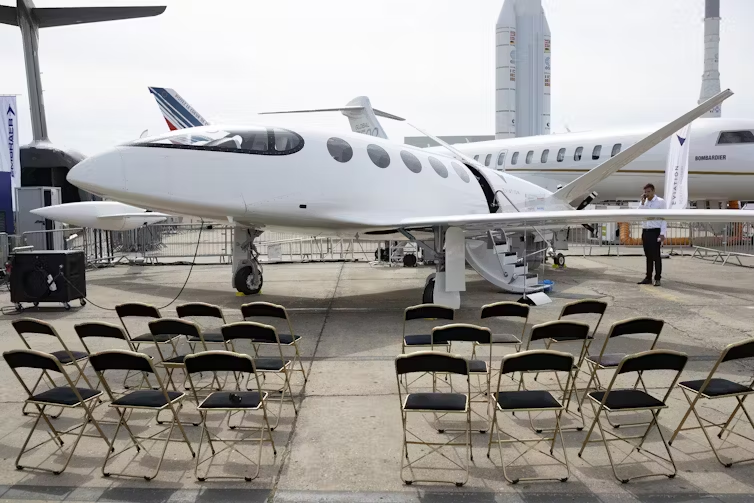
Electric planes are buzzing—literally. Small battery-powered models like Beta Technologies’ Alia are already ferrying cargo short distances with zero emissions. For passengers, startups aim for 19-seaters by 2026, perfect for regional hops under 500 miles.
Hydrogen’s another contender: Airbus is prototyping planes running on it, emitting just water vapor. These could handle longer routes, but infrastructure lags. I’ve test-flown a simulator for an electric trainer plane—smooth, silent, thrilling. No roar, just whisper-quiet flight. The future? Net-zero by 2050 if we invest now. Advocate for R&D funding; it’s our ticket to guilt-free skies.
Practical Tips for Eco-Friendly Flying
Start simple: Fly direct to avoid fuel-guzzling takeoffs. Pack light—every extra pound burns more. Choose economy over premium; business class? Four times the emissions. Use public transit to airports.
On my last trip, I biked to the gate—okay, not really, but carpooling cut my ground emissions. Refill water bottles post-security, skip single-use plastics. And offset what you can’t avoid. These tweaks add up, turning travel into a positive force.
Comparison: Flying vs. Alternatives
Wondering if that flight’s worth it? Let’s compare a London to Paris trip for one person.
| Mode of Travel | CO2 Emissions (kg) | Time | Cost (USD) | Notes |
|---|---|---|---|---|
| Short-Haul Flight | 150-200 | 1.5 hours | 100-150 | Includes airport travel; high altitude multiplier. |
| Eurostar Train | 10-20 | 2.5 hours | 80-120 | Scenic, relaxing; lowest emissions. |
| Driving (solo) | 200-250 | 6-7 hours | 50-70 (fuel) | Higher if alone; carpool drops to 50-60 kg. |
| Bus/Coach | 30-50 | 8-10 hours | 40-60 | Budget-friendly, social. |
Trains win hands-down for short hauls—90% less carbon. For longer trips, like Seattle to NYC, flying’s often inevitable, but offsets help. I’ve swapped a flight for a train across Europe; the views beat turbulence any day.
People Also Ask
Should we give up flying for the climate?
Not entirely, but cut back on non-essentials. One long-haul flight equals years of carpooling emissions. I’ve skipped a few and discovered local gems—try “flight diets” for balance.
Is sustainable air travel possible?
Yes, with SAF, electrics, and efficiency gains. By 2050, net-zero is feasible if we scale tech and fly smarter. It’s not tomorrow, but progress is real.
How much does a flight contribute to climate change?
Varies: A NYC-London round-trip? About 1 ton CO2 per passenger. Globally, aviation’s 2.5% of CO2, but 5% of warming due to altitude effects.
Can carbon offsetting make flying green?
It’s a start—funds real reductions elsewhere. But pair with fewer flights; offsets aren’t excuses to overfly. Choose verified programs for impact.
What’s the best way to reduce flight emissions?
Direct flights, economy seats, efficient airlines. Tools like Atmosfair rank options. Long-term: Push for policy changes like fuel taxes.
Best Tools for Climate-Conscious Travel
Navigational intent covered: Where to offset? Try Sustainable Travel International’s calculator—free, accurate, funds verified projects. For bookings, Google Flights’ emissions filter points to low-carbon options.
Transactional side: Best tools include the ICAO Carbon Emissions Calculator for precise estimates, or apps like TripIt with green integrations. I’ve used Kayak’s eco-filter; it surfaces sustainable picks effortlessly. For offsets, top 2025 picks:
- Sustainable Travel International: High-impact projects, easy flight calc.
- Atmosfair: Airline-ranked, transparent.
- Gold Standard: Rigorous verification, global reach.
These aren’t just tools—they’re your advocacy kit.
FAQ
How do I calculate my flight’s carbon footprint?
Use free tools like the ICAO calculator: Input route, class, passengers. It factors aircraft type and load. My Seattle-NYC calc? 1.2 tons—shocking but actionable.
Are electric planes ready for commercial use?
Short-haul yes—small cargo flights now, passengers by 2030. Beta’s Alia flies today; full fleets need battery breakthroughs. Exciting times ahead.
What’s the most effective way to offset flights?
Choose Gold Standard or VCS-certified programs avoiding greenwashing. I’ve stuck with reforestation—they’re tangible, like seeing trees grow via updates.
Should I fly less or offset more?
Both: Fly less for direct cuts, offset unavoidable trips. One less flight saves more than offsets for ten. Balance adventure with earth care.
How can I advocate for greener aviation?
Sign petitions for SAF mandates, choose eco-airlines, share your story. Contact reps—policies like EU’s ReFuelEU drive change. Your voice amplifies.
Whew, we’ve covered a lot of ground—or should I say sky? Flying doesn’t have to clip our wings; it can lift us toward a cooler planet. That family reunion? Worth it, offset and all. But next time, maybe I’ll train it. What’s your first step? Let’s chat in the comments—together, we’re the wind beneath change.